
How do I set up startup accounting for my Australian business?
Setting up accounting correctly from day one saves time, avoids compliance risk and gives you the financial clarity investors and lenders expect. This step-by-step playbook walks founders through a one-week quick start, software selection and configuration, a lean chart of accounts, bookkeeping cadence, BAS and Single Touch Payroll essentials, and a decision checkpoint to decide whether to DIY or hire local help.
Quick start checklist you can complete in week one
Finish these minimum tasks in your first week to keep records clean and avoid common early mistakes.
- Choose a legal structure and register an Australian Business Number, then store entity paperwork in one folder.
- Open dedicated business bank accounts and credit cards separate from personal accounts.
- Sign up for a cloud accounting platform such as Xero, MYOB, or QuickBooks and create a single admin user.
- Connect bank feeds, set basic GST codes, and create an invoice template with payment terms.
- Decide who will do day-to-day bookkeeping and payroll, and document that role.
- Book a short advisory session to confirm BAS and STP obligations and your lodgement cycle.
For a short primer and checklist you can copy, see our startup accounting basics post.
Step 1: register correctly and open dedicated business bank accounts
What to register now
Register an ABN for the trading entity. If you form a company, keep ASIC and company registration documents with the ABN record. You only need to register for GST when your expected annual turnover reaches A$75,000 or more, or if you choose voluntary registration to claim input tax credits.
If you plan to hire employees, make sure the entity has a Tax File Number and is set up to report payroll. Early registration keeps you ready for growth and avoids retroactive complications.
Why separate bank accounts matter
A dedicated business account creates a clear audit trail, simplifies reconciliations, and speeds bookkeeping. Connect business accounts to your cloud accounting platform so transactions import automatically instead of being keyed in by hand.
Step 2: choose cloud accounting software and do an initial configuration
Which platform to pick and why
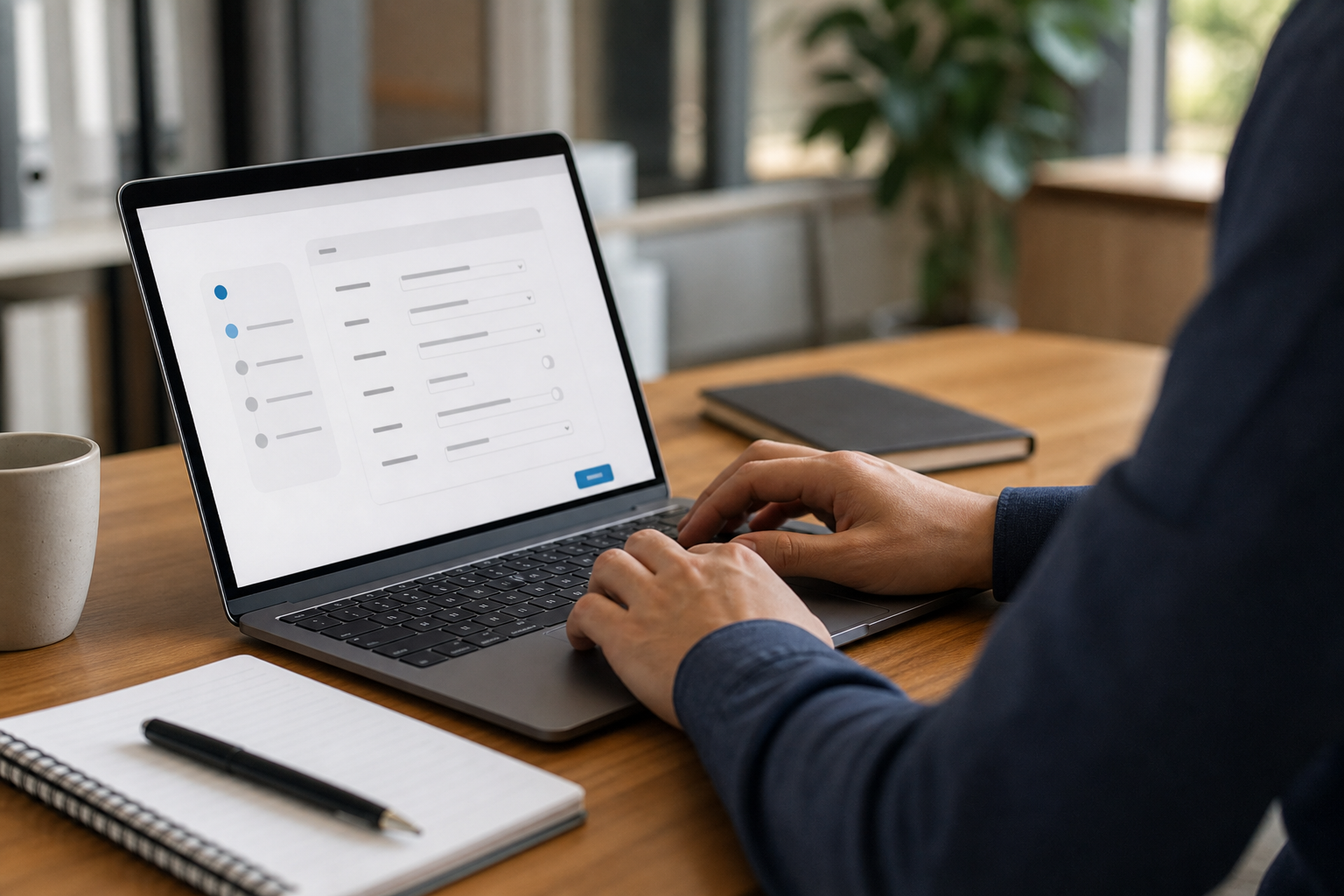
Cloud accounting makes bookkeeping accessible and scalable. Xero, MYOB and QuickBooks all work with Australian bank feeds, payroll tools, and local accountants. Choose based on integrations you need, how you invoice customers, and whether built-in payroll suits your business. Many founders start by self-managing bookkeeping in cloud software because automation reduces manual workload and frees time to focus on growth, as noted in startup bookkeeping guidance from Wise.
Initial settings to configure
- Company name, ABN and financial year end.
- Invoice template, payment terms (for example, 7, 14 or 30 days), and a default sales GST code.
- Bank feeds for all business accounts and rules to auto-categorise recurring transactions.
- Chart of accounts mapped to your business model, with separate revenue, cost of goods sold and expense categories.
- User access and permissions so staff can raise invoices without seeing payroll data.
Setting these defaults early avoids extensive rework later. For practical setup tips that cover Xero, MYOB and QuickBooks in an Australian context, see our startup accounting basics article.
Step 3: set a simple chart of accounts and bookkeeping cadence
Design a starter chart of accounts
Begin lean. A useful starter chart separates these core groups:
- Revenue: product sales, service income, other income.
- Cost of goods sold: direct materials and direct labour for sold products.
- Operating expenses: marketing, rent, utilities, software subscriptions, insurance.
- Payroll liabilities: PAYG withholding, superannuation payable.
- Owner distributions or drawings if the entity is a sole trader or partnership.
Keep categories broad in the first 12 months and add subaccounts only when you need detail for tax planning, KPIs or investor reporting.
Bookkeeping rhythm and who does what
- Daily to weekly: capture invoices issued and supplier bills, attach receipts and digital copies where possible.
- Weekly: review bank feed matches, reconcile obvious transactions and resolve uncategorised items.
- Monthly: reconcile all bank and credit card accounts, run an aged receivables and payables report, and review cash flow.
- Quarterly or monthly: prepare BAS data and check GST treatment ahead of lodgement.
Cloud automation and receipt capture tools make these routines achievable for founders who DIY, while maintaining a consistent process preserves accuracy as your transaction volumes grow (Accounting Seed).
Step 4: meet BAS, GST and payroll STP obligations from day one
When to register for GST and BAS basics
You must register for GST if annual turnover is expected to exceed A$75,000. GST registration allows you to claim input tax credits on business purchases. BAS lodgement frequency depends on your registration and could be monthly or quarterly. Keep GST-coded records so your BAS lodgement is accurate and auditable.
Payroll and Single Touch Payroll essentials
If you employ staff, your payroll must report to the ATO using Single Touch Payroll each pay run. Configure payroll in your accounting software or connect a certified payroll app to submit STP. Maintain employee records, pay slips and superannuation calculations so PAYG withholdings and super payments are correct and timely.
If any of this is unfamiliar, a short advisory session will confirm your BAS and STP timeline and ensure your software is configured correctly. Advanced Accounting Taxation & Business Services includes BAS preparation and STP compliance among core services and offers a free initial consultation to clarify obligations (Advanced Accounting Taxation & Business Services).
Step 5: decision checkpoint: should you DIY accounting, hire a bookkeeper, or engage a concierge CFO?

Objective triggers for each option
- DIY bookkeeping: keep it in-house while transactions are few, you have no payroll, or you have time and confidence in cloud bookkeeping tools.
- Hire a bookkeeper: bring one on when monthly reconciliation, BAS preparation, or timely payroll is causing errors or taking the founder off core tasks.
- Engage a concierge CFO: use this when you need cash flow modelling, investor reporting, fundraising support or strategic financial planning.
Founders often worry about cost and loss of control. A local bookkeeper or outsourced service can reduce admin time and lower compliance risk while leaving strategic decisions with you. A concierge CFO provides higher level financial leadership without the overhead of a full-time hire.
For package options and onboarding, see our startup accounting basics post and the services on the firm homepage Advanced Accounting Taxation & Business Services.
Step 6: monthly controls and year-end reporting you must plan for
Monthly controls to run reliably
- Reconcile all bank and credit card accounts and clear exceptions promptly.
- Review aged receivables and implement a short collections process for overdue invoices.
- Verify payroll totals, superannuation payments and PAYG withholding before payment dates.
- Produce a one-page management snapshot: bank balance, burn rate, revenue variance and top three actions.
Year-end items to prepare now
Keep supporting documentation so producing year-end financial statements and tax returns is straightforward. Early preparation reduces surprises at tax time and gives reliable numbers for investors and lenders. If you prefer to outsource year-end reporting, an accounting partner can compile financial statements and assist with tax lodgement and compliance checks.
Final checklist and where to get local help in Parramatta or Liverpool
Use this short checklist before your next BAS lodgement or pay run.
- ABN and entity paperwork filed, business bank accounts open and connected to software.
- Cloud accounting set up with bank feeds, GST codes and invoice templates.
- Chart of accounts simplified and first month reconciled.
- Payroll configured for STP and super arrangements recorded.
- Bookkeeping cadence and responsibility documented.
- Book a short advisory session to confirm your BAS cycle and compliance obligations.
If you want local support to set this up quickly, Advanced Accounting Taxation & Business Services is a Sydney firm with offices in Parramatta and Liverpool offering bookkeeping, BAS return services and concierge CFO support. The firm promotes cloud-enabled workflows with Xero, MYOB and QuickBooks and a free initial consultation to match a package to your needs Advanced Accounting Taxation & Business Services. For a brief technical primer and next steps, read our startup accounting basics article.
Frequently asked questions
When should a startup register for GST in Australia?
Register for GST if you expect annual turnover of A$75,000 or more. You can also register voluntarily to claim input tax credits on purchases. If you are unsure about timing, a short advisory call will help you assess expected turnover and the cash flow effects of voluntary registration.
How often should I do bookkeeping and reconcile bank feeds?
Reconcile bank feeds at least weekly, perform a monthly full reconciliation for all accounts, and review payables, receivables and cash flow monthly. Increase frequency if your business has a high transaction volume or inventory movements.
Do I need an accountant or only a bookkeeper for my startup?
A bookkeeper manages day-to-day recording, reconciliations and BAS preparation. An accountant or concierge CFO adds tax advice, year-end financial statements and strategic planning. Choose a bookkeeper if your need is transactional accuracy, and an accountant or CFO when you need tax planning or investor-grade reporting.
What is Single Touch Payroll and when does my startup need to comply?
Single Touch Payroll is the Australian payroll reporting system that sends pay and superannuation information to the ATO each pay run. If you have employees, your payroll software must be configured to submit STP reports from the first pay run.
Key takeaway: start with a clean, cloud-first setup and a simple bookkeeping rhythm. That keeps compliance straightforward and gives you the numbers you need to make confident decisions.
Advanced Accounting Taxation & Business Services
Ready to get started? Schedule a free initial consultation with Advanced Accounting Taxation & Business Services to review your setup and choose the right package for bookkeeping, BAS or concierge CFO support.